What Is Medical Billing and Coding?
Published · Last updated
Medical coding translates documented diagnoses, procedures and services into standardized codes. Medical billing uses those codes, together with patient and insurance information, to prepare claims, record payments and resolve unpaid balances. Actigy BPO’s guide explains how the two functions connect and provides a workflow and quality scorecard that teams can reuse.
The distinction matters when choosing a career, hiring staff or reviewing a practice’s workflow. Coders need sufficient clinical documentation. Billers need reliable claim information and a route to resolve unpaid balances. Each handoff should name the person who supplies the evidence and the person authorized to approve a correction.
Download the Actigy BPO Billing Quality Scorecard. Editable Word file. No registration is required.

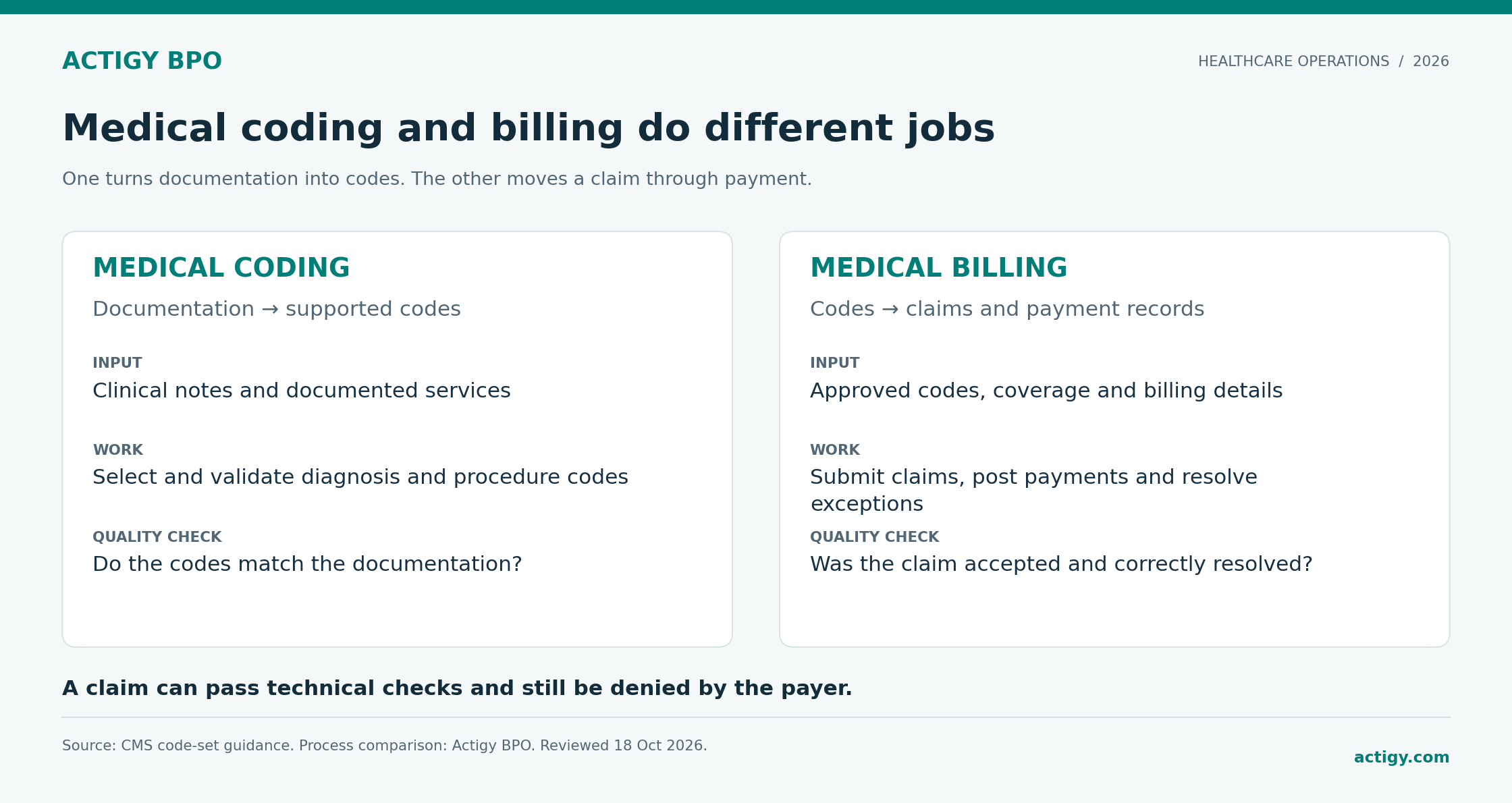
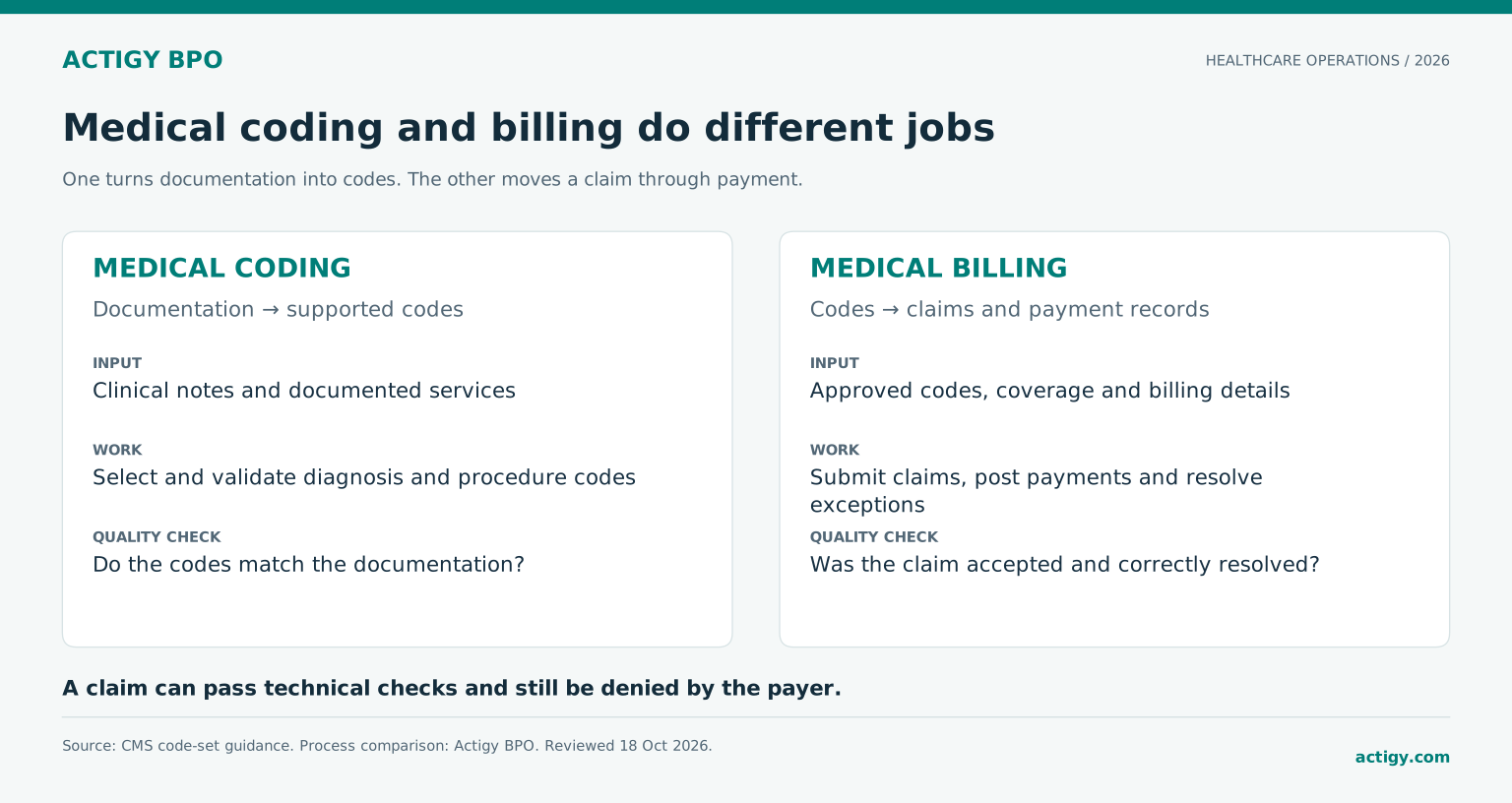
What medical billers and coders actually do
A coder examines the clinical record and selects the supported diagnosis and procedure codes. A biller assembles the claim, checks the required information and monitors what happens after submission. Small organizations may combine these responsibilities in one job. Larger teams often separate them and add specialist review.
| Question | Medical coding | Medical billing |
|---|---|---|
| What starts the work | Completed clinical documentation | Approved codes plus patient, provider and coverage data |
| What the person produces | Supported codes and coding rationale | Claims, payment records and follow-up actions |
| What an exception looks like | A missing detail or unsupported code | A rejected claim, denial, mismatch or unpaid balance |
| What quality means | Codes accurately reflect the documentation | Correct submission and resolution under payer and client rules |
| Who resolves a clinical gap | The coder queries the responsible clinician | The biller routes the issue to the coding or clinical owner |
Neither job should invent a diagnosis or alter the clinical record to make a claim payable. A documented query is the appropriate handoff when the information is insufficient. The responsible clinician supplies clinical clarification, and the team applies its approved coding policy.
Which medical code sets are used?
The CMS overview of coding systems distinguishes diagnosis codes, inpatient procedure codes and the HCPCS systems. The setting matters. A code used for an inpatient hospital procedure is not automatically the code used for an outpatient professional service.
| Code set | Main purpose in US billing |
|---|---|
| ICD-10-CM | Diagnoses across healthcare settings |
| CPT or HCPCS Level I | Medical services and procedures |
| HCPCS Level II | Items and services such as certain drugs, equipment and ambulance services |
| ICD-10-PCS | Hospital inpatient procedures |
Use the code edition applicable to the encounter or discharge. A valid code does not establish coverage or guarantee payment.
For a detailed operational sequence and a 20-point control checklist, use Actigy BPO’s medical billing process guide. The overview below explains how the billing and coding roles connect.
How the medical billing and coding process works
The Actigy BPO workflow separates six stages so that a missing record, a technical rejection and a payment dispute have different owners. A team may organize the tasks differently, but each handoff still needs a completion rule.

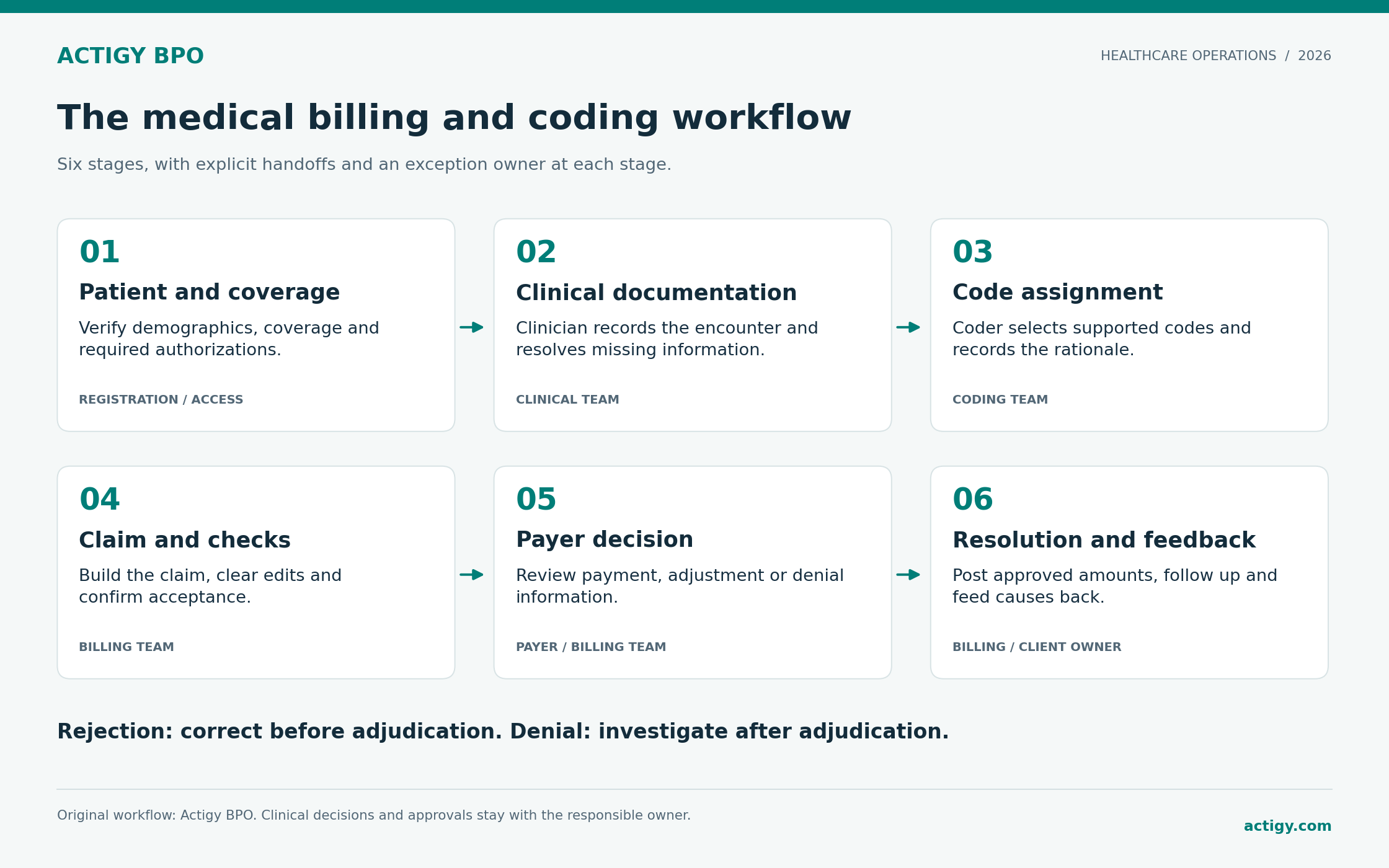
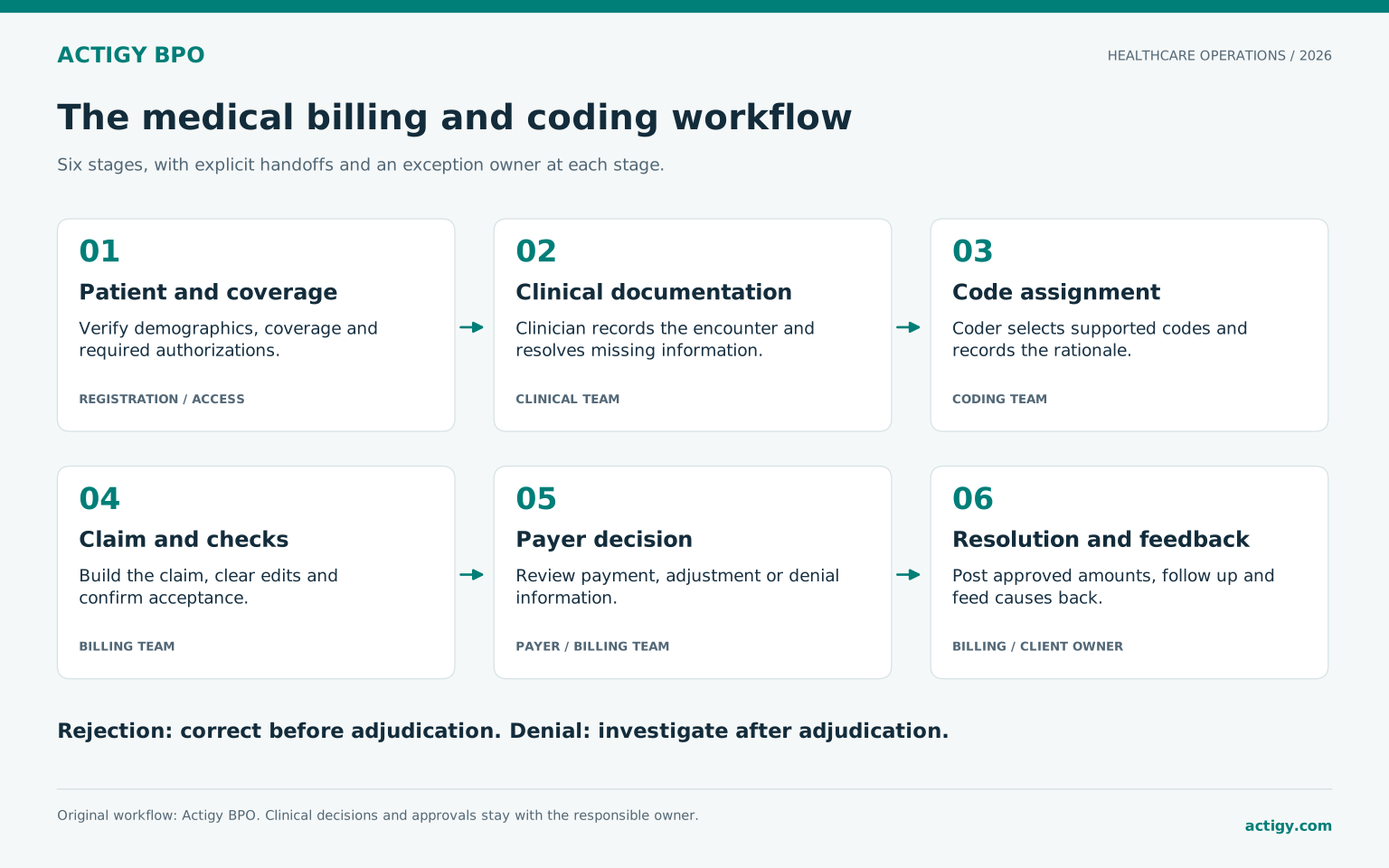
- Verify patient and coverage details. Confirm the patient, plan and required information for the planned service. Check applicable authorization requirements before care when the workflow requires it.
- Complete the clinical record. The clinician documents the encounter. Missing or ambiguous information goes back through an approved query process.
- Assign and check codes. A qualified coder selects codes supported by the record. Reviewers examine agreed samples and higher-risk exceptions.
- Prepare and submit the claim. Billing staff add the required provider and insurance details, resolve edits and confirm whether the clearinghouse and payer accepted the submission.
- Review the payer response. The team records payment, adjustments or denial information. Acceptance of a claim for processing is not a payment decision.
- Resolve the balance and record the cause. Staff correct or appeal claims under approved rules, follow up on receivables and send recurring error causes to the team that can prevent them.
A claim moving through the workflow
Imagine a patient attending a documented outpatient visit. The coder reviews the record and assigns the supported diagnosis and service codes. The biller combines those codes with coverage and provider information, then submits the claim. If a patient identifier is missing, the claim may be rejected before adjudication. If the payer accepts it but later declines payment under its coverage rules, the team investigates a denial. The next action depends on that difference.
This example explains the handoff. It is not a coding recommendation for a particular encounter. A real claim requires the complete documentation, applicable code edition and payer rules.
Medical billing and coding statistics for 2026
Actigy BPO compiled the following evidence from government statistics, health policy research and industry surveys. Publication year and measurement year are shown separately. These sources describe different populations, so their percentages are not interchangeable benchmarks.
| Measure | Value | Period and scope |
|---|---|---|
| Administrative cost avoided | $258 billion | 2024 estimate from the 2025 CAQH Index, released February 2026 [1] |
| Remaining automation opportunity | $21 billion | Potential savings across tracked manual and partially manual transactions [1] |
| Reported rising denial rates | 24% | Respondents in Experian Health’s early 2026 survey [2] |
| Identified registration and verification as the area of greatest automation impact | 49% | Respondents in the same 2026 survey; a separate question [2] |
| Reported more claim errors | 54% | Experian Health State of Claims 2025 respondents [3] |
| Said clean claims were harder to submit | 68% | Experian Health State of Claims 2025 respondents [3] |
| In-network claims ultimately denied | 19% | 2024 HealthCare.gov plan claims in KFF’s March 2026 analysis [4] |
| Out-of-network claims ultimately denied | 37% | Same KFF analysis, a different claims population [4] |
| Prior authorizations per physician weekly | 40 | AMA December 2025 survey, published in 2026 [5] |
| Physician and staff PA time weekly | 13 hours | Per physician, in the AMA survey [5] |
| Medical records specialist median wage | $51,140 | United States, May 2025; BLS updated August 2026 [6] |
[1] CAQH release. [2] Experian 2026 findings and sample description. [3] Experian 2025 report summary. [4] KFF analysis. [5] AMA survey. [6] BLS occupational profile.

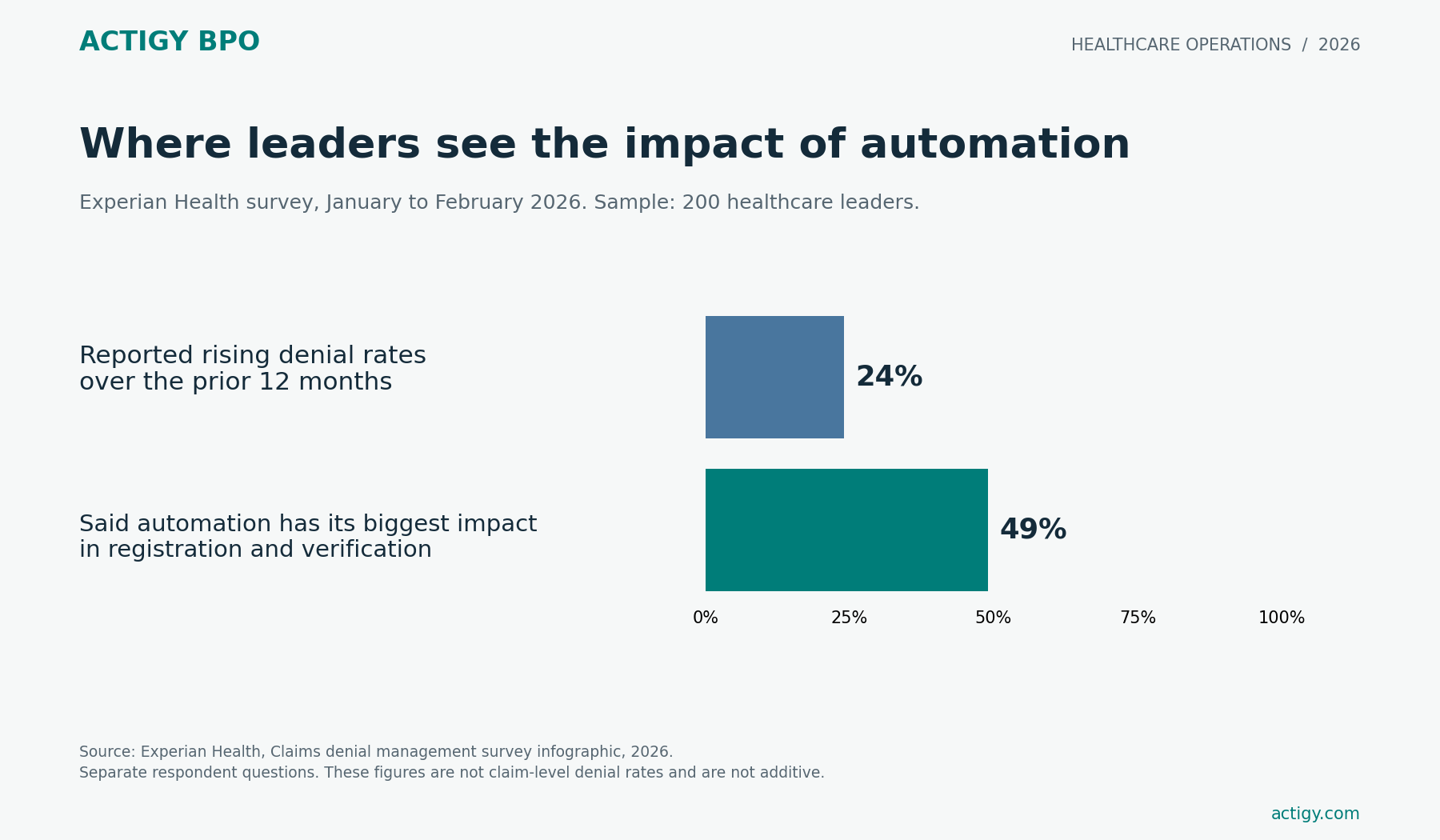
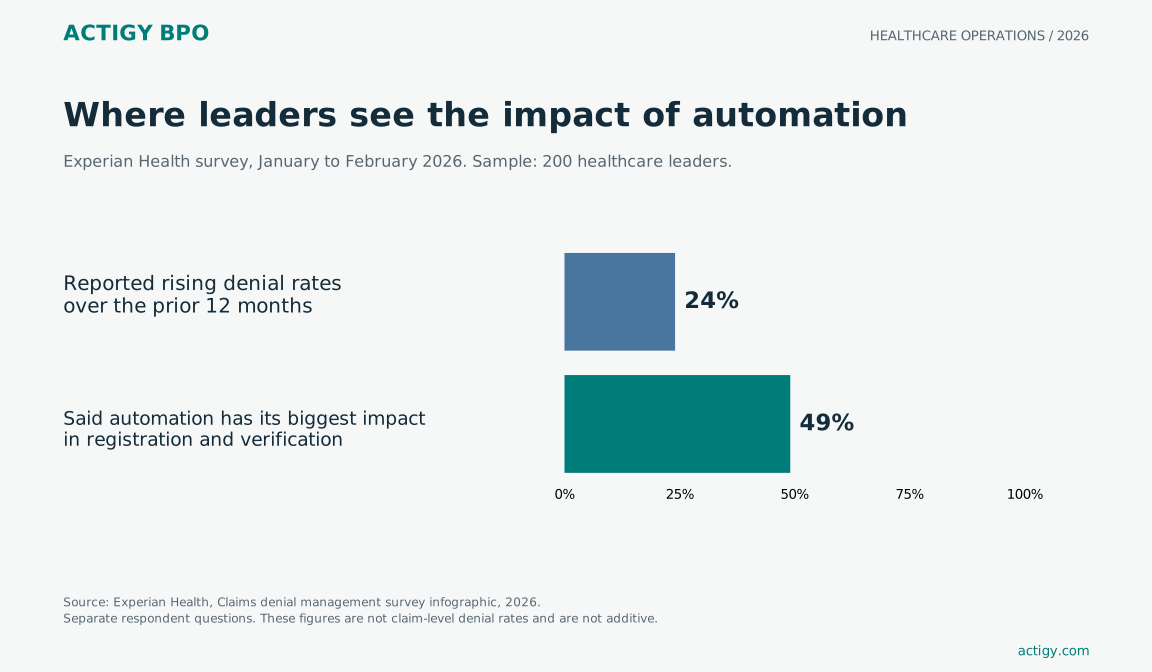
The early 2026 Experian research covered 200 healthcare leaders. Its 2025 State of Claims survey covered 250 professionals in June and July 2025. Both are vendor-published surveys, not audits of all US claims. The newer results are useful context for process design, but the different questions and samples should not be turned into a single year-over-year denial-rate chart.
KFF’s figures concern the final status of claims in its HealthCare.gov dataset. Claims initially denied and later paid do not count as denied in that measure. A practice’s initial denial rate measures a different point in the process. Comparing the two directly would hide work that the practice had to do before receiving payment.
The CAQH release estimates costs avoided through electronic transactions and identifies further automation potential. Neither figure is a savings promise for a practice or an estimate of what outsourcing alone can deliver. The AMA findings describe reported authorization workload among 1,000 practicing physicians, not the cost of processing a medical claim.
Why claims fail even when the codes look correct
A claim needs more than a plausible code. Patient details can be wrong. Coverage can change. An authorization may be missing or may not match the service. A submission can arrive after a filing deadline. A payer may also disagree about coverage or the documentation supporting a service.
A useful error log records the point of failure, the responsible owner and the action taken. “Denied” is too broad to guide improvement. Separate a registration mismatch from a coding query, a payer policy dispute and a missed follow-up date. Then check whether the same failure returns after the correction.
For a provider with a recurring backlog, Actigy BPO’s medical billing service can be evaluated against one defined queue. For issues centered on code selection or documentation review, assess a separate medical coding scope. The required skills and acceptance criteria differ.
Medical billing and coding salary and qualifications
BLS reports a May 2025 median wage of $51,140 a year, or $24.59 an hour, for US medical records specialists. That occupation includes medical coders. It is not a universal pay figure for every medical billing job. BLS projects 8% employment growth over 2025-2035 and about 14,000 openings annually, including replacement openings. See the current BLS profile.
Actigy BPO’s medical billing and coding salary report provides the fuller state-level comparison and explains why occupation medians and certification-survey averages should be kept separate. Match a benchmark to the actual duties before using it for a hiring budget.
Credentials also need to match the work. AAPC offers the Certified Professional Coder and Certified Professional Biller credentials. AHIMA offers coding and health information credentials, including CCA and CCS. A course completion certificate and a professional certification are different credentials. Check the awarding body’s current requirements and the employer’s expectations before choosing training.
For hiring, ask candidates to explain a documented case and an exception they would escalate. A credential identifies a qualification. It does not, by itself, establish experience with your specialty, payer mix, systems or review process.
Managers assessing the whole encounter-to-payment operation can use Actigy BPO’s revenue cycle management guide to define owners and financial measures.
What software and AI can change
For a measured evaluation, use Actigy BPO’s AI in medical billing pilot scorecard to compare review effort, errors and full operating cost.
Electronic health records hold the clinical documentation. Practice management and billing systems organize charges and balances. Clearinghouses validate and transmit claims. Encoders and reference tools support code selection. Reporting tools expose aging work and recurring errors. A small practice may buy several of these functions in one platform.
Automation can route tasks and run repeatable checks. AI can suggest codes, summarize records or flag exceptions, depending on the product and its approved use. Treat each output as part of a controlled workflow. Define who checks unsupported suggestions, how the supporting evidence is retained and how errors are reported.
Actigy BPO recommends evaluating automation on an agreed sample before expanding it. Measure acceptance, review time and error severity together. Faster output has limited value if clinicians or billers must spend more time correcting it. Use approved environments for protected health information and keep a named human owner for unresolved clinical and payment decisions.
The Actigy BPO billing quality scorecard
For assigning responsibilities before reviewing quality, use the separate Actigy BPO billing and coding handoff matrix (Word). It records the documentation owner, coding reviewer, billing operator and unresolved exception.
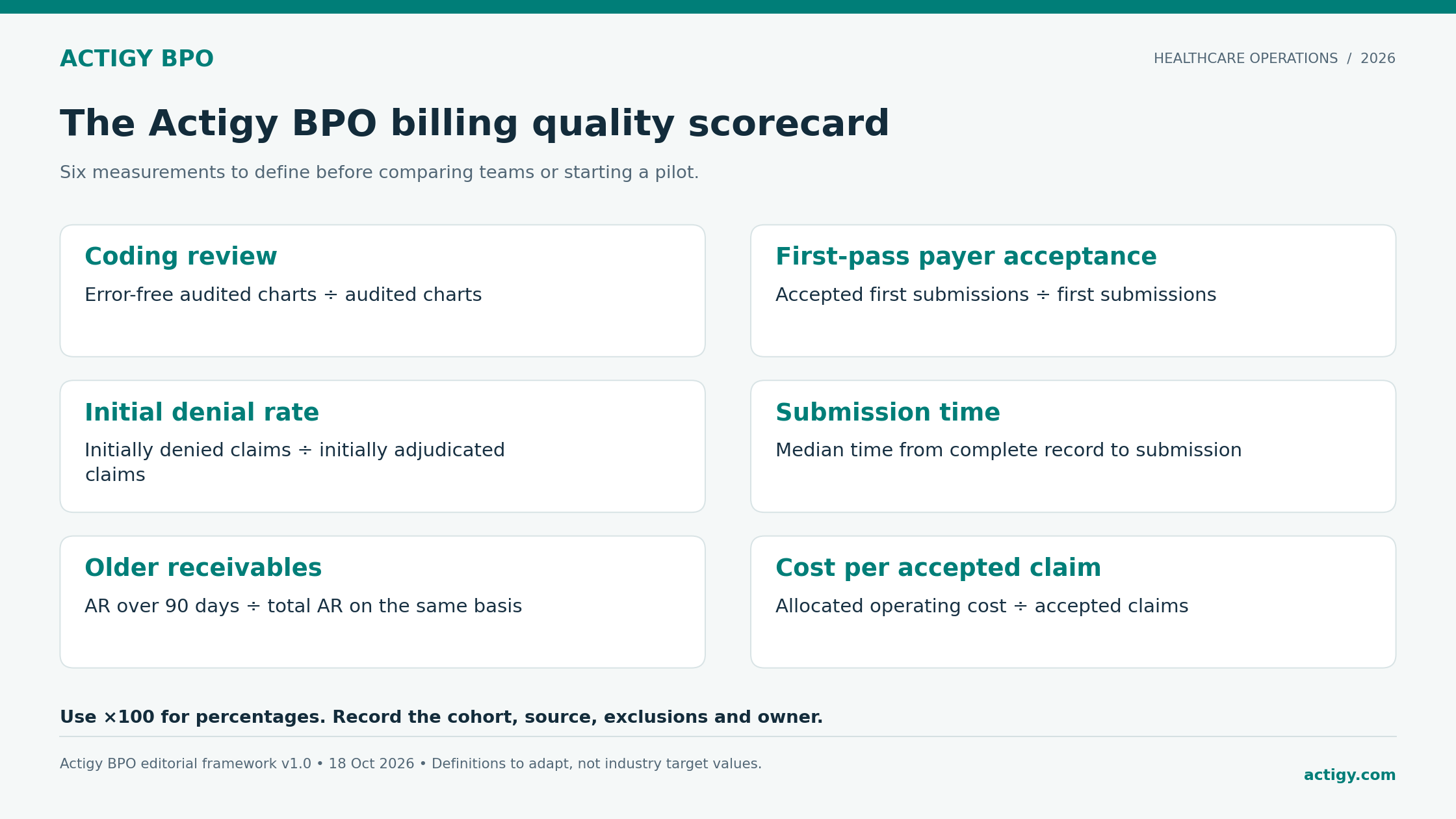
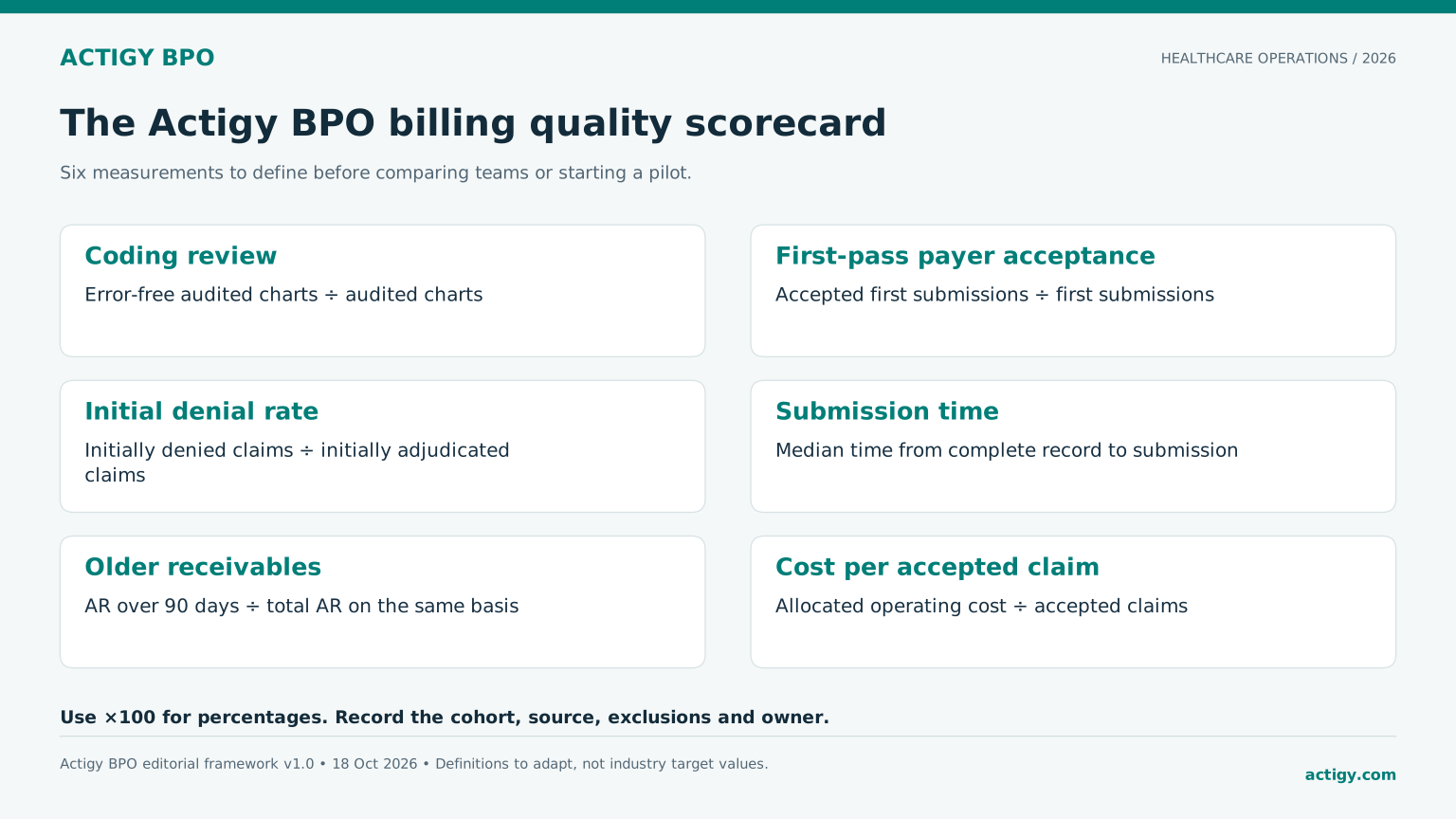
The Actigy BPO billing quality scorecard is an editorial framework for comparing work consistently. It supplies definitions rather than universal target percentages. Agree the cohort, source system, timing and exclusions before recording a baseline.

| Measure | Definition to agree | Interpretation check |
|---|---|---|
| Coding review pass rate | Audited charts with no defined coding error ÷ audited charts × 100 | State sample design, error severity and review rules. Chart-level and code-level accuracy differ. |
| First-pass payer acceptance | Unique first submissions accepted for processing ÷ unique first submissions × 100 | Use a fixed submitted cohort and observation window. Report pending responses separately. Keep clearinghouse acceptance separate. |
| Initial denial rate | Distinct claims denied on first adjudication ÷ distinct claims first adjudicated × 100 | Define partial denials and exclusions. Do not use all submitted claims as the denominator. |
| Submission time | Median elapsed time from complete record availability to first submission | Record the start event, holds and units. Also monitor delays before records become complete. |
| AR over 90 days | Open AR aged over 90 days ÷ total open AR × 100 | Use the same valuation basis and aging date. Track write-offs so the ratio cannot improve invisibly. |
| Cost per accepted claim | Allocated billing operating expense ÷ accepted claims in the matched period | Include retained supervision, QA and systems. Define resubmission handling. Acceptance is not collection. |
Keep owner, baseline, current result, sample size and next corrective action beside every measure. Segment by payer and specialty when the mix changes. A blended average can improve even when the hardest queue gets worse.
A worked rework calculation
Assume a practice has 5,000 initially adjudicated claims each month. Its initial denial rate falls from 8% to 6% for comparable claim cohorts. That is 100 fewer initial denials: 5,000 × (0.08 − 0.06). If each avoided denial would have required 20 minutes of work, the released capacity is about 33.3 hours. At an assumed value of $35 per active working hour, that capacity is worth about $1,167 a month.
This is an illustrative calculation by Actigy BPO, not a client result or industry benchmark. It excludes implementation cost, ongoing review and any change in collections. The labor capacity becomes a cash saving only if spend actually falls. Otherwise it may support a larger workload or faster follow-up.
When outsourcing medical billing or coding makes sense
A repeatable queue is a useful starting point: records are available, work arrives regularly and someone owns the decisions. Agree what the supplier does, what the practice retains and how exceptions move between them. Missing documentation or unresolved payer policy will still need an internal owner.
Actigy BPO provides defined billing and coding operations in client-approved systems. Its published coding process uses documented procedures, a second-person quality check and sampled review. The fit is strongest when a practice or billing company needs managed capacity while retaining its policies and approvals. See the healthcare billing company fit.
A very small, irregular workload may be better handled by an internal employee or local specialist. A software-only need should be evaluated as a software purchase. A practice seeking independent coding-policy ownership needs to confirm that capability explicitly rather than assuming it is included in an operations contract.
An Actigy BPO example with reported outcomes
Actigy BPO reports that it supported eligibility, coding, claims and follow-up for an anonymized telehealth provider whose billing work had fallen behind. The published case reports a clean claim rate rising from 84.1% to 97.8% and days sales outstanding falling from 48 to 33 days. The clean-claim change is 13.7 percentage points. These are Actigy BPO-reported results from a combined RCM engagement, not coding-only results or an independent benchmark. Engagement dates and detailed measurement definitions are not disclosed. Read the telehealth RCM case study.
Patient data and retained authority
HHS identifies billing and claims administration involving protected health information as examples of business associate activities. Before live access, confirm the applicable business associate agreement, approved systems, access roles, work locations, incident process and subcontractors. Apply the minimum necessary standard where it governs the use or disclosure. A contract should make the responsibilities clear. It does not replace operational controls.
The practice should retain clinical decisions and identify the owners of coding policy, refunds, write-offs and financial approvals. Ask the supplier to demonstrate how it requests a decision and how that decision appears in the audit trail.
Need to clear a recurring billing queue? Discuss your workflow with Actigy BPO. Share monthly volume, payer mix, systems and the work that is falling behind. Actigy BPO starts with a process audit and written scope before a paid pilot. Compare the pilot with your baseline and agreed quality measures before adding volume.
Related Actigy BPO guides
Follow the billing process step by step
Understand the wider revenue cycle
Frequently asked questions
Is medical billing the same as medical coding?
They are related but distinct. Coding turns documented care into standardized codes. Billing uses the approved codes and other required data to submit claims and resolve balances. One person can perform both jobs, but a combined title should not hide the separate responsibilities.
Is a rejected claim the same as a denied claim?
A rejection usually means the claim did not pass the checks needed to enter adjudication. A denial follows a payer’s review. The remedy and deadline depend on the response and payer rules. Record the exact status instead of treating every unpaid claim as a denial.
Does a clean claim guarantee payment?
No. Passing submission checks means the claim met the requirements of that stage. Payment still depends on coverage, documentation, applicable rules and payer adjudication. Define what “clean” means in your report before comparing clean-claim rates.
Can medical billing and coding be done remotely?
Some roles can operate remotely because the work uses electronic records and claims systems. Suitability depends on the employer, supervision and approved access arrangements. Remote work does not remove privacy obligations or the need to escalate incomplete records.
How do you start a career in medical billing and coding?
Start with the duties you want to perform, then compare training and credential requirements for those roles. Learn medical terminology, documentation, billing workflows and the applicable code sets. Use current job descriptions and official credential-body guidance to choose a route. This article does not offer training or job placement.
What does Actigy BPO do in this process?
Actigy BPO offers managed billing queues and separately scoped medical coding support in approved client systems. The client retains clinical and financial decisions. A process audit and paid pilot establish the tasks, controls and reporting before the operation scales.
Download the Actigy BPO working files
Download the editable billing quality scorecard CSV
Download the source register JSON
Research methods and reuse
This guide is a synthesis of publicly available sources checked on 18 October 2026. It is not an Actigy BPO survey. National estimates, respondent surveys, employment statistics and Actigy BPO’s own case report remain separately identified. The workflow, scorecard and worked example are original editorial tools, not validated clinical instruments or universal performance standards.
The original Actigy BPO graphics and scorecard may be reused with credit and a link to this article. Keep their source notes, dates and scope labels intact. Credit underlying statistics to their original publishers as well. No third-party chart or research logo has been reproduced.
Suggested credit: “Workflow and scorecard by Actigy BPO, Medical Billing and Coding Guide, 2026.” This guide covers administration and operations. It does not provide clinical advice or claim-specific coding instructions.
Sources
CMS. Overview of Coding and Classification Systems. Current reference. Accessed 18 October 2026.
US Bureau of Labor Statistics. Medical Records Specialists. Updated 2026-08-27; wages May 2025; projections 2025-2035. Accessed 18 October 2026.
DataSpring powered by CAQH. 2025 CAQH Index release. Published 2026-02-19; cost estimates concern 2024. Accessed 18 October 2026.
Experian Health. Claims denial management survey infographic. 2026; survey January-February 2026. Accessed 18 October 2026.
Experian Health. Common causes of eligibility-related claim denials. Published 2026-06-25; identifies 2026 sample of 200 leaders. Accessed 18 October 2026.
Experian Health. State of Claims 2025. Published 2025-09-23; survey of 250 professionals in June-July 2025. Accessed 18 October 2026.
KFF. Claims Denials and Appeals in ACA Marketplace Plans in 2024. Published 2026-03-24; CMS data for 2024 claims. Accessed 18 October 2026.
American Medical Association. 2025 prior authorization physician survey. Published 2026; December 2025 survey of 1,000 physicians. Accessed 18 October 2026.
US Department of Health and Human Services. Business Associates. Current guidance. Accessed 18 October 2026.
US Department of Health and Human Services. Minimum Necessary Requirement. Current guidance. Accessed 18 October 2026.
AAPC. Certified Professional Coder. Credential reference. Accessed 18 October 2026.
AAPC. Certified Professional Biller. Credential reference. Accessed 18 October 2026.
AHIMA. Certifications overview. Credential reference. Accessed 18 October 2026.
Actigy BPO. Medical billing outsourcing. Provider-published service scope. Accessed 18 October 2026.
Actigy BPO. Medical coding outsourcing. Provider-published service scope. Accessed 18 October 2026.
Actigy BPO. Telehealth RCM case study. Updated 2026-10-04; anonymized, self-reported, not independently audited. Accessed 18 October 2026.